Passiflora Alata – Granadilla

P. Alata is a cold hardy evergreen vine native to the amazonian regions of Peru and Brasil. The indigenous name “ouvaca” means “red star”, referring to it’s flowers. The seductive flowers are intensely fragrant almost too sweet handle.
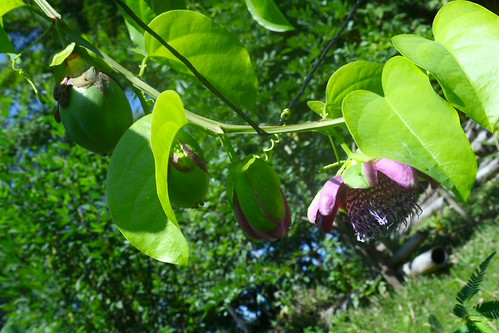
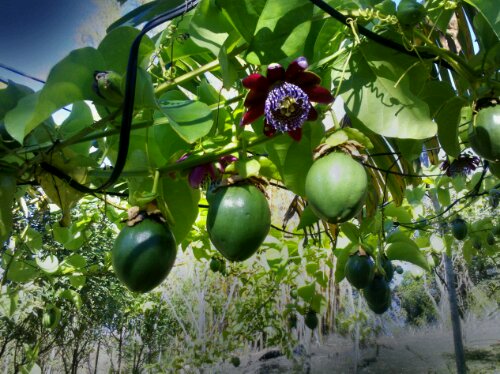
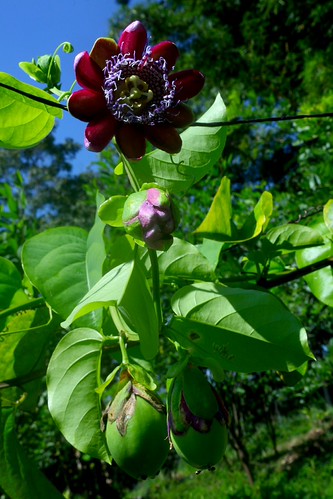
Cross pollination with a second vine is recommended for larger fruits. Can be done by hand with a brush if you are really ambitious. Thriving in full sun, ouvaca will attract bees, butterflies and birds.

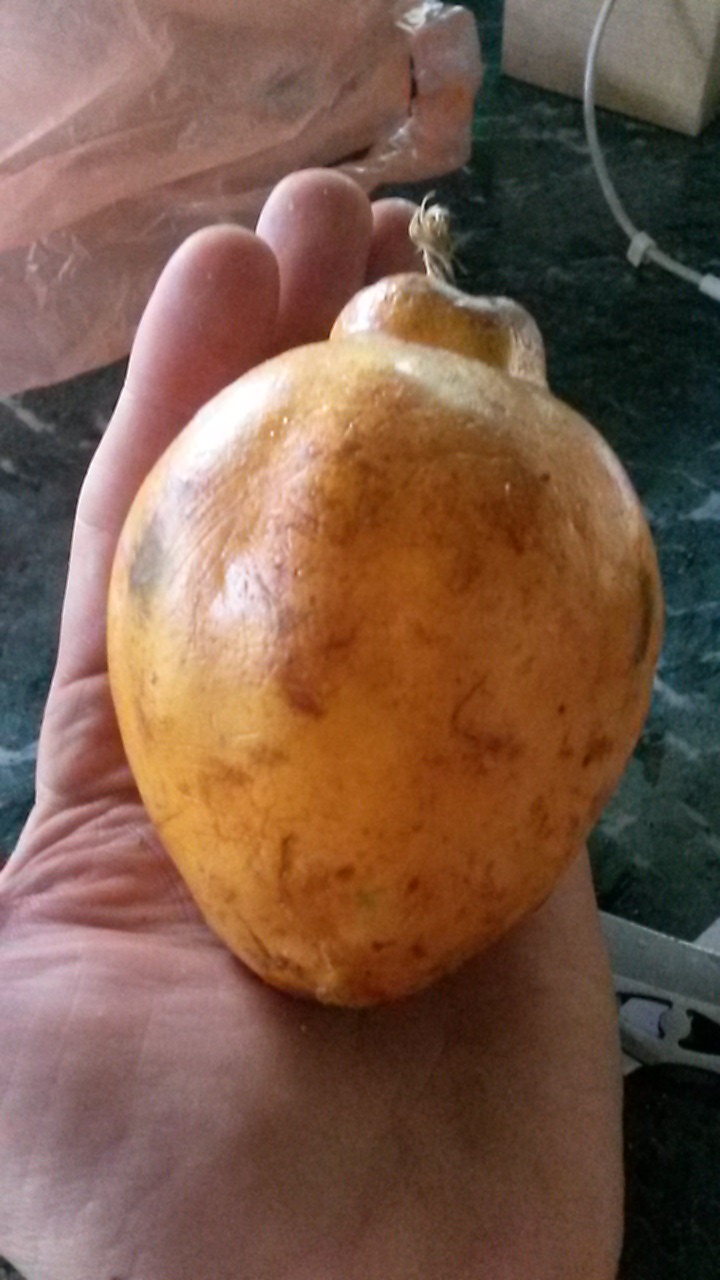

The fruit is sweet and best eaten fresh. Drinks are not that delightful but could be made into sauces or deserts. The edible interior of the thick shell is soft an flavorless and could be used to thicken juices.
Paullinia Cupana – Guarana – Brazilian Cacao
A very unique climbing plant from the Amazon basin that bears small seeds which contain twice as much caffeine as coffee beans. It has been used to make energy drinks which are most popular in Brazil, but traditionally, the Guaranís people would make an herbal tea. After shelling, washing, drying, and pounding into a flour, they would knead the dough into cylinders known as gaurani bread. Then grated into hot water along with sugar.


Annona Cherimola x A. Squamosa x A. Reticulata

This triple hybrid set many fruits this year with a big one that was the size of a decent Biriba. With rose colored skin and almost to sweet handle, I have a new favorite Annona.


Theobroma Bicolor – White Cacao – Pataxte


Native to Central and South America, pataxte was utilized along side cacao for thousands of years.
This pod I found growing at Punta Mona, Costa Rica and was a little bit too spoiled to eat but I just wanted the seed.


They can be eaten fresh, fried or in soups. If your keen, roast and grind them to make a hot-pataxte. The flesh is also used for make a foamy addition to a cacao & maize drink.
They are slow growing tropical trees that prefer humid conditions and are tolerant of flooding.
Pataxte can handle more direct sun than cacao and can grow from 10-30 meters, depending on how much sun they get.
Rubus Leucodermis – Black Raspberry – Frambuesa Negra
Native from Western Canada down to Mexico, this Rubus grows very well in the highlands of Costa Rica as seen in the photos below. Founds these in a friend’s back yard garden in San Jose where they produce year round. Over 1000 meters above sea level.


Leucodermis means “with a white skin” referring to the white bark.
Blighia sapida – Ackee – Vegetable Brain

It is related to the lychee and the longan, and is an evergreen tree that grows about 10 metres tall, with a short trunk and a dense crown.
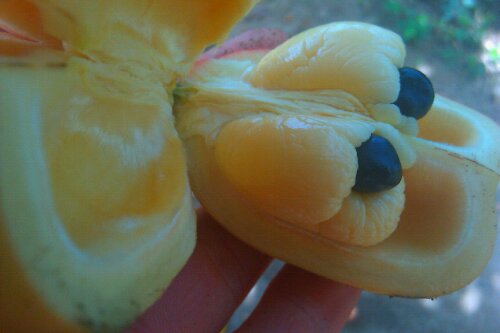


The scientific name honours Captain William Bligh who took the fruit from Jamaica to the Royal Botanic Gardens in Kew, England in 1793 and introduced it to science. The common name is derived from the West African Akye fufo.
The fruit was imported to Jamaica from West Africa (probably on a slave ship) before 1778. Since then it has become a major feature of various Caribbean cuisines, and is also cultivated in tropical and subtropical areas elsewhere around the world.
It looks and tastes like fried eggs with a hint of cheese.
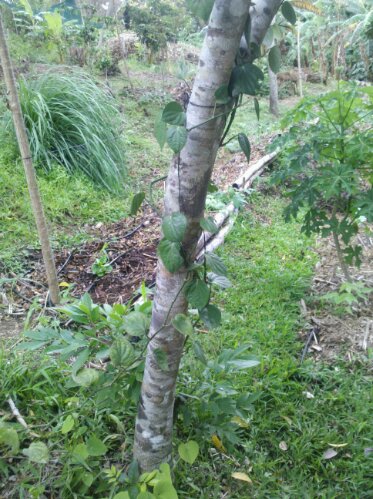
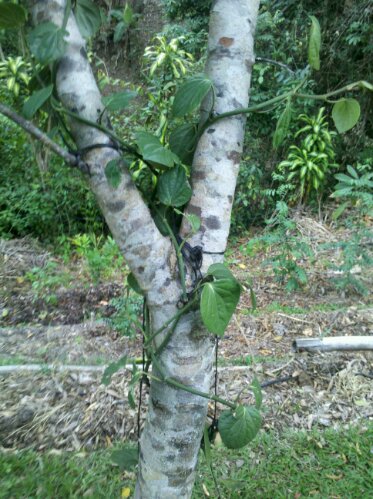
Piper Nigrum – Peppercorn – Pimienta Negra



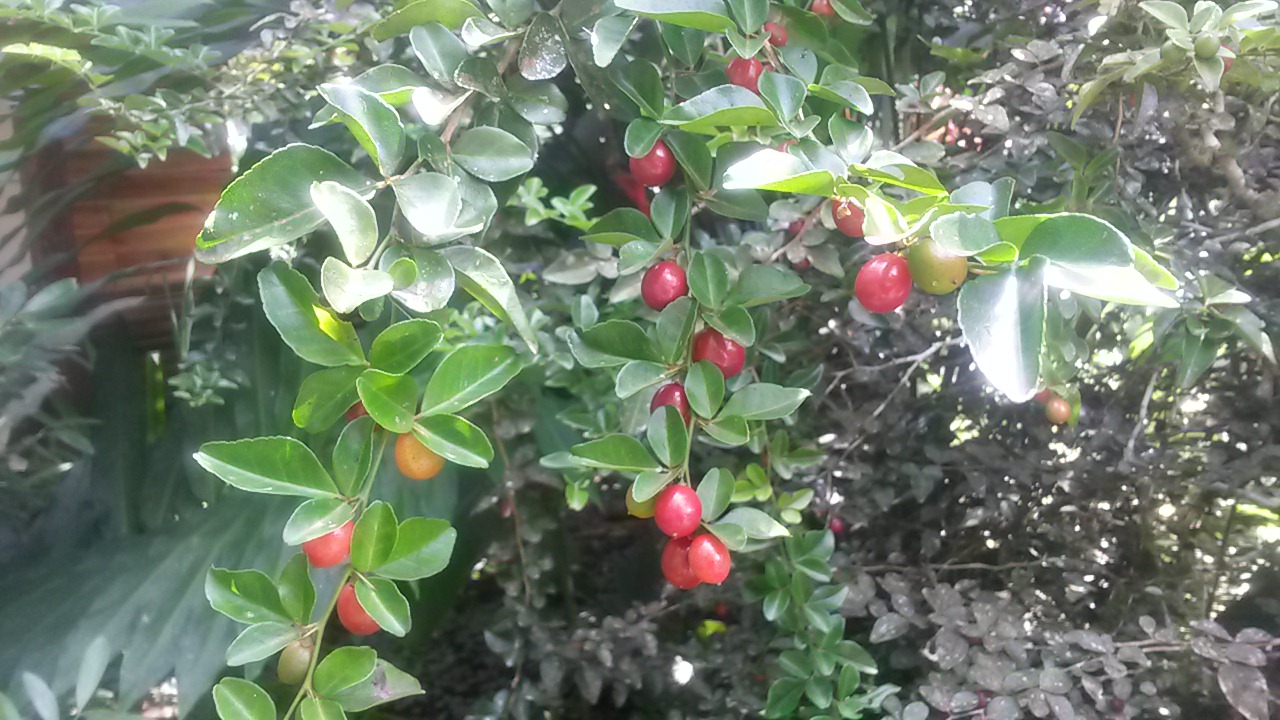
Triphasia trifolia – Lime Berry
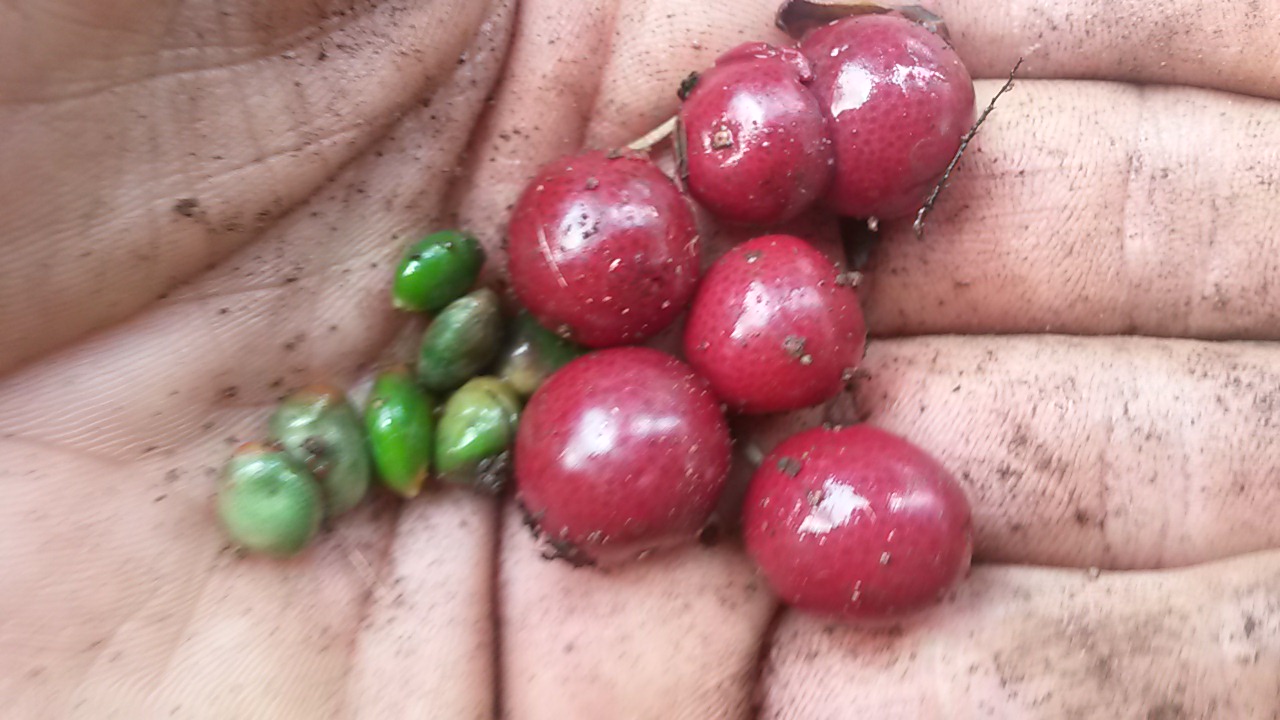
Great garden fruit as it barely grows to 3 meters. Prefers partial shade from what i’ve noticed. Tastes like lime but not as sour. More tropical than a true citrus so can’t tolerate the cold.
Solanum Betaceum – Tamarillo – Tree Tomato
Harvesting tamarillos after only a year of planting. They can be propigated by seeds and cuttings. The latter tends to branch more resulting in shorter shrubs rather than a big 5 meter tree tomato. Fast to produce peaking at 4 years, they tend to die after 12 years


